

 上傳3D模型
 上傳SU模型
 合成全景
合成全景北京懷柔玉米地住宅 | xiān氙建筑工作室
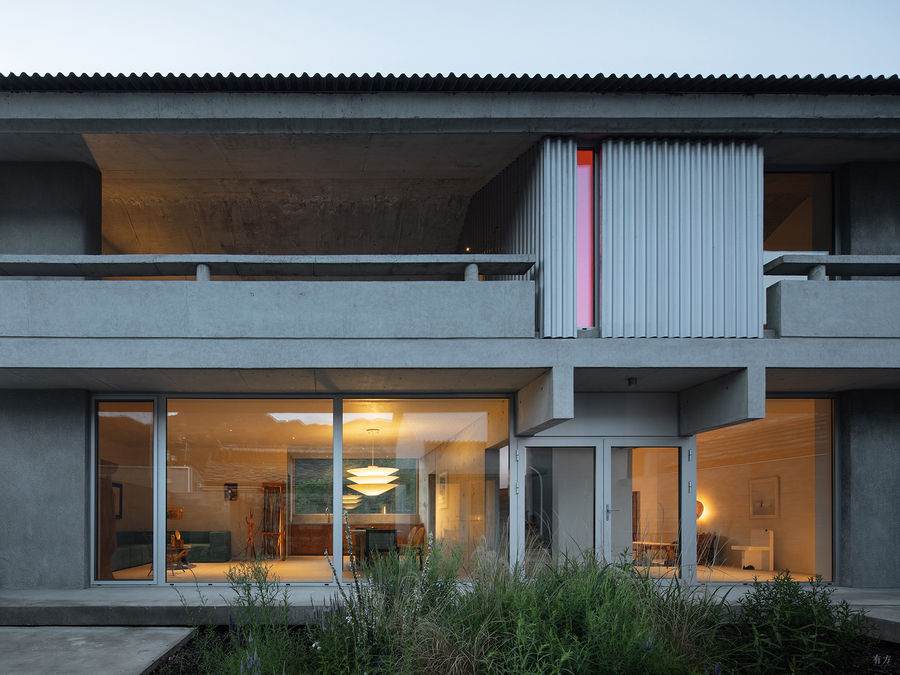
正房南立面 ?夏至
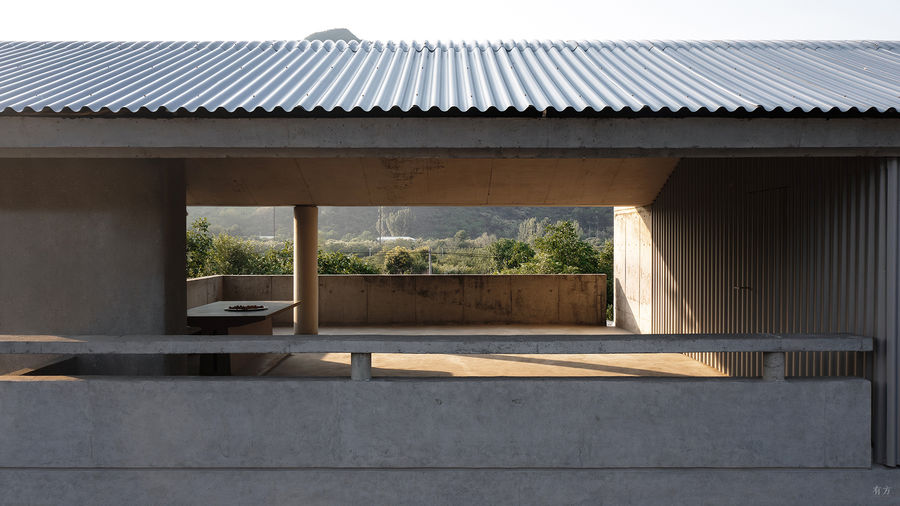
正房露臺(tái) ?夏至
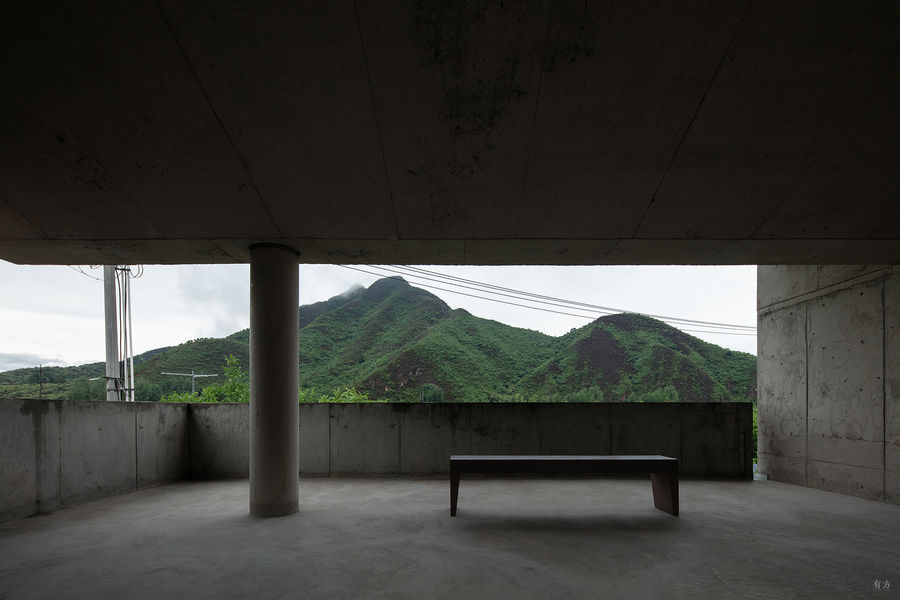
露臺(tái)北 ?夏至
設(shè)計(jì)單位 xiān氙建筑工作室項(xiàng)目地點(diǎn) 中國(guó)北京建成時(shí)間 2024年3月建筑面積 210平方米
身體的直覺(jué)
當(dāng)初第一次進(jìn)到宅基地,院里滿是自由落體的稠密植物,生命力旺盛,濃烈飽滿的陽(yáng)光、空氣自在又凝聚,都給人顯著的恣意感覺(jué)。直到進(jìn)入房子里面,一切又都結(jié)束了。When we first stepped into the homestead, the yard was brimming with freely-growing and dense plants, teeming with vitality. The intense and abundant sunlight and the air, both free and condensed, bestowed a remarkable sense of unrestrainedness. Until we entered the house, all came to an end
在更早的零星日常之中,我們沿著這群山之間的漫長(zhǎng)河道,開(kāi)車往來(lái)過(guò)很多次,也恰巧徒步過(guò)場(chǎng)地南山。也許因?yàn)槿狈暮拥烙H自引水灌溉、在田地間勞作和環(huán)顧凝望的生活,我們才會(huì)本能地爬向老宅的屋脊,大口呼吸著遼闊的空氣,享受著隨時(shí)可以在廣闊整體中分身的想象。We had, coincidentally, driven back and forth along the river valley numerous times and had trekked over mountains south of the site long before our first visit. Perhaps due to the absence of living like personally drawing water from the river for irrigation, working in the fields parenting the sprouts, we instinctively climbed onto the roof ridge of the old house, inhaling the vast air in deep breaths and enjoying the imagination that we can break away from the whole at any time.
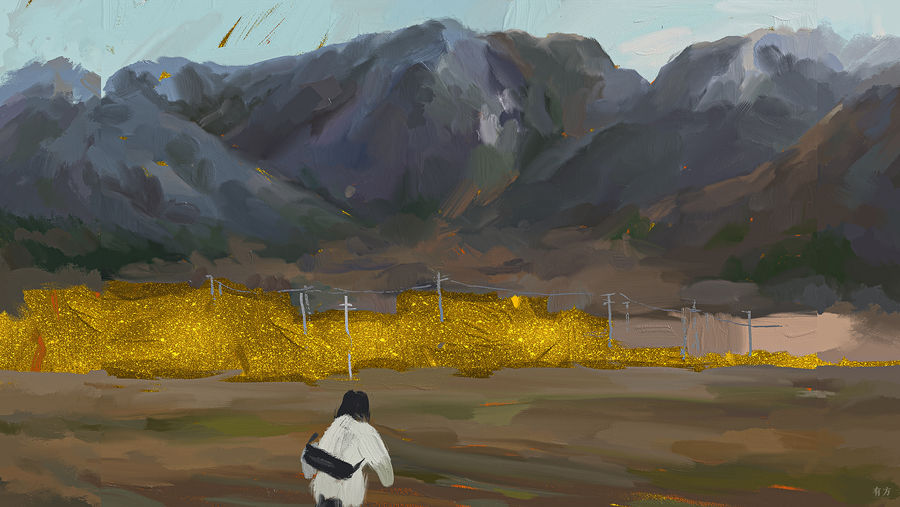
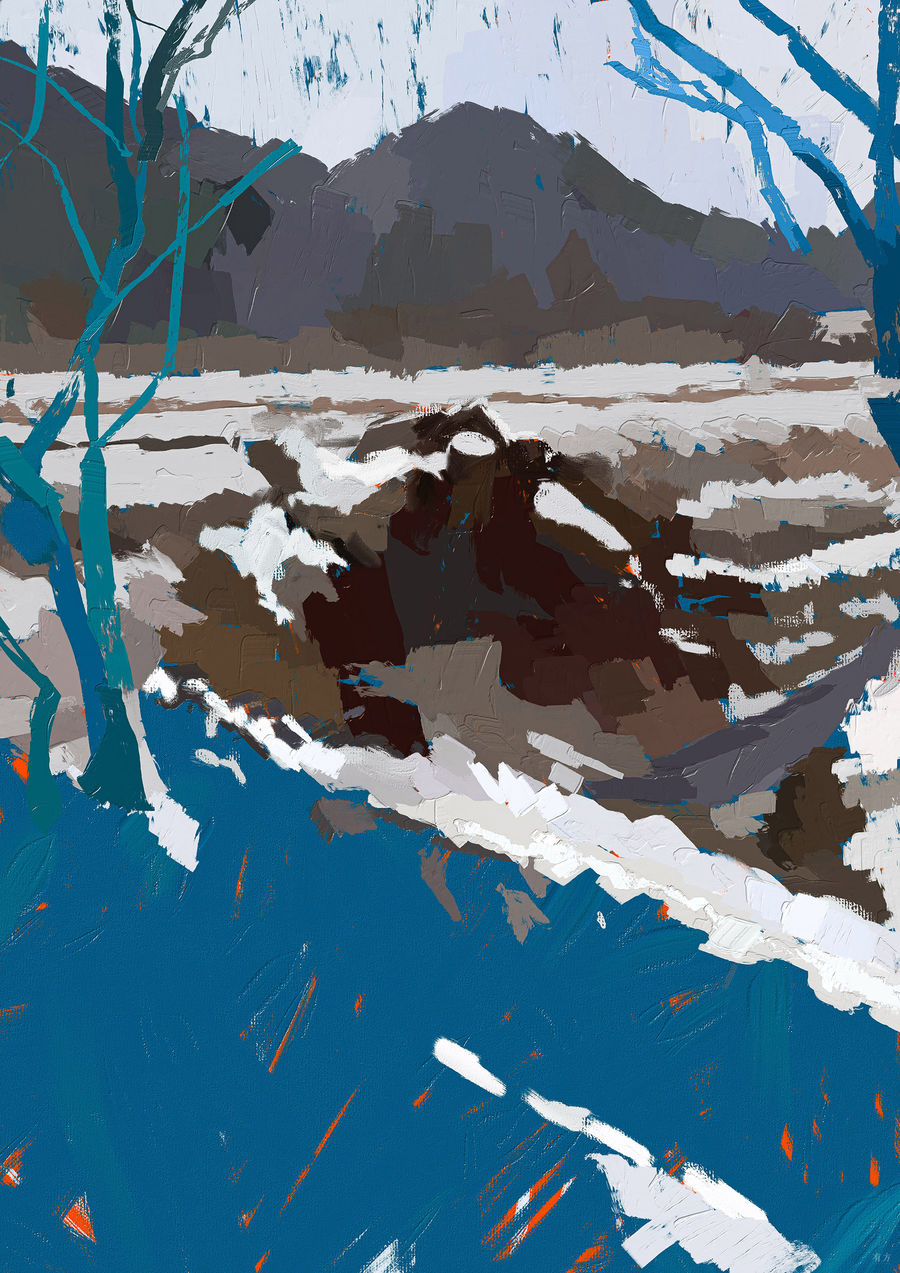
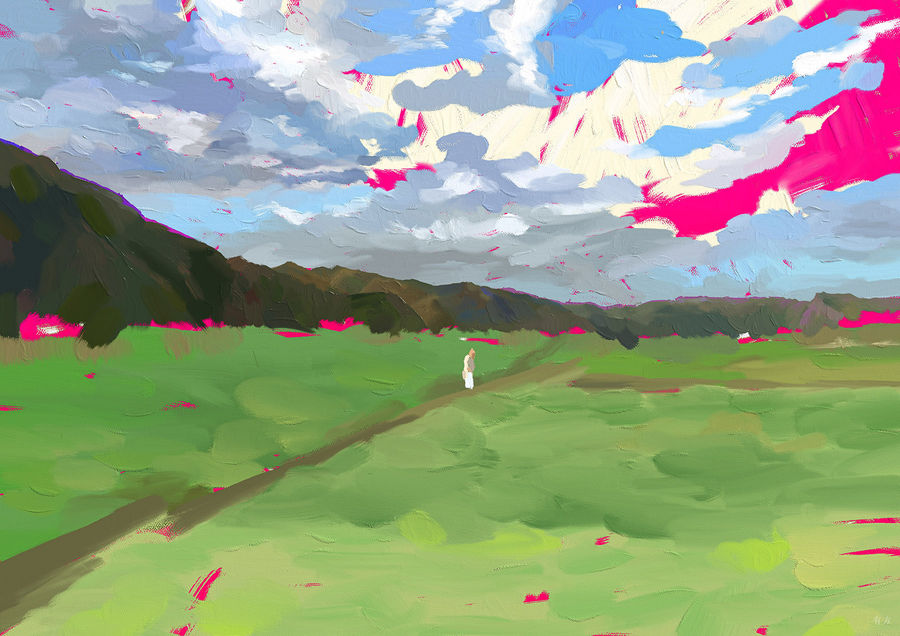
繪畫:秋、冬、夏的場(chǎng)地感知 ?劉宜鋒
“像一只落在電線上的鳥像一個(gè)午夜唱詩(shī)班里的醉漢我已嘗試以自己的方式尋找自由”——Leonard Cohen
大地上的整體處境
院子所在的村莊,南北都有連綿的群山環(huán)抱,在村莊和北山之間有常年流淌的河道、大片的田地。我們從這類山河田村的“古老”圖景中安家、聚集。往昔很多世代的刻寫,讓我們對(duì)此暫且保有親近的本能。The village where the homestead is located is surrounded by continuous mountains to the north and south. In between the village and the northern mountain lay a flowing rivers and large fields. We settle and gather in such "ancient" landscapes of mountains, rivers, villages and fields, and the memories of many past generations were shaped make us temporarily retain the instinct of closeness to the nature.
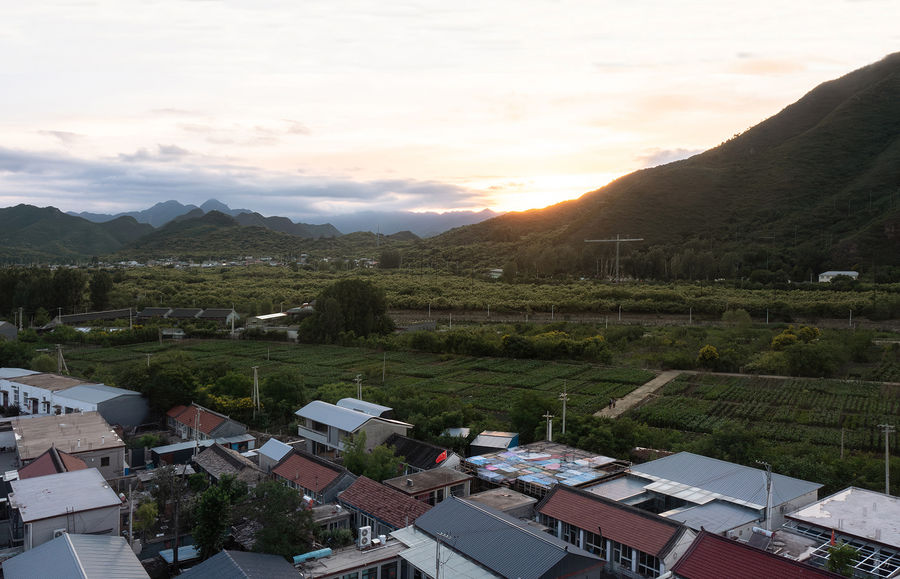
日落方向的玉米地住宅鳥瞰 ?夏至
聽(tīng)老人們說(shuō),直到三四十年前,這片耕地水源充沛,從河岸到院墻北邊,全都是水稻。如今,村里的年輕人都在城里工作和定居生活,把閑置的院子出租,或安排翻建以兼顧老年人的日常生活,偶爾帶孩子回來(lái)和對(duì)外經(jīng)營(yíng)。老人們不愿意離開(kāi),繼續(xù)量力而行耕種日常所需。Stories told by the elderly picture a farmland abundant with water until three or four decades ago, in which from the river bank to the north of our homestead, it was full of paddy fields as far as the eye can see. Nowadays, younger people leave the village to work and settle in the city, renting out the idle courtyards, arranging for renovations or new builds to take into account the daily life of the elderly, occasionally bring their children back to live or homestay operation externally. While the elders unwilling to leave and continue to cultivate as much as they can be for their daily needs.
無(wú)論我們生于城市還是鄉(xiāng)村,我們都開(kāi)始了一種移動(dòng)的生活,鄉(xiāng)村正在演化為收入補(bǔ)充、家園構(gòu)想,甚至生命體會(huì)。Whether we were born in the city or the countryside, we all start to lead a life of changing. The countryside is evolving into a kind of income increasing, and new imagination of home and life experience.
居中生活
近5年,業(yè)主過(guò)著經(jīng)常往返于城中心和鄉(xiāng)村的生活,通過(guò)親自改造一個(gè)老院子,真實(shí)觸摸到了同時(shí)居于城市與鄉(xiāng)村之中的生活可能。隨后產(chǎn)生傳播 “居中生活”概念的愿望,期待包含自由度與生命力,持續(xù)構(gòu)建不同的公共場(chǎng)景和住宅樣本。這是一塊租用20年、4分大小的宅基地,室內(nèi)150平方米的項(xiàng)目需求,包含基本的公共空間和三個(gè)臥室(最終成為一套主臥、一套工作室、一個(gè)臨時(shí)可變房間)。xiān氙建筑因?qū)V闊環(huán)境的追尋而成立,在山河田村的起源性中,我們尤其關(guān)心隨之而來(lái)的核心問(wèn)題:人與建筑如何站立?In the past five years, the owner has led a life of frequently traveling between the city center and the countryside. By personally renovating the old courtyard, they truly experienced the possibility of living simultaneously in both the city and the countryside. Subsequently, they developed the aspiration to spread the concept of "living in-between", expecting to encompass freedom and vitality and continuously construct different public scenes and residential samples.
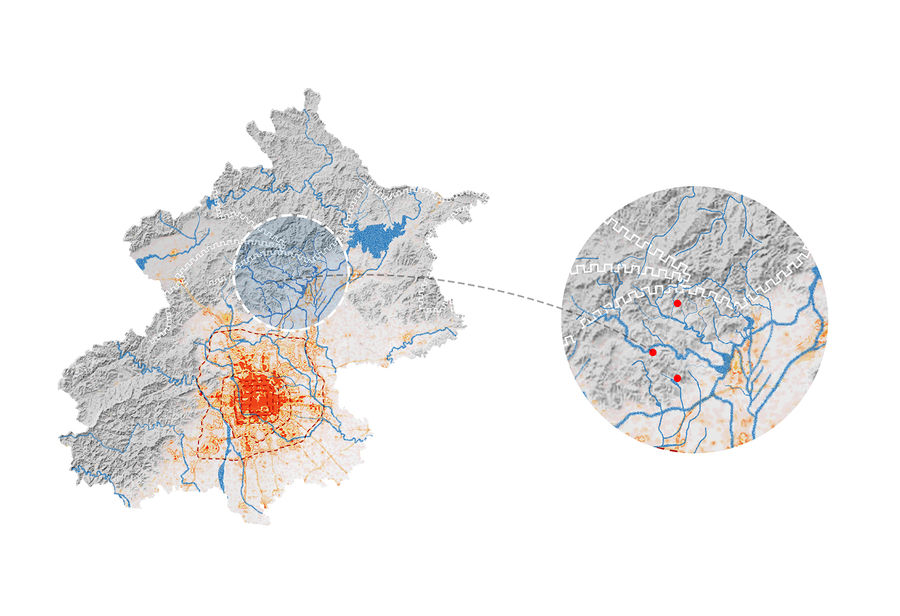
xiān氙建筑的京北“居中生活”實(shí)踐點(diǎn)位圖:擦石匠院、玉米地院、峪廬院 ?xiān氙建筑
場(chǎng)內(nèi)建筑布局
北方冬季陽(yáng)光珍貴,當(dāng)?shù)馗小皳岅?yáng)”一說(shuō)(東偏北轉(zhuǎn)15度)。正房布局家家遵守、代代傳承,逐漸演化得端莊自然、落落大方,正是村宅聚集站立的樸素過(guò)程。我們沿用正房這一布局傳統(tǒng),涉及站立姿態(tài)的正房立面當(dāng)需審慎推敲。In the north, sunlight is precious in winter, you have to "compete for sunlight" (rotating 15 degrees from due south to east). Each courtyard has the most important building facing south, which is called “Zheng Fang” in Chinese. The layout of Zheng Fang, passed down from generation to generation, gradually evolves to be dignified, natural and graceful, which is exactly the simple process of the village gathering and standing. As we follow this traditional layout, the facade of Zheng Fang, where the question of how should a building be standing will be looked into, ought to be carefully considered.
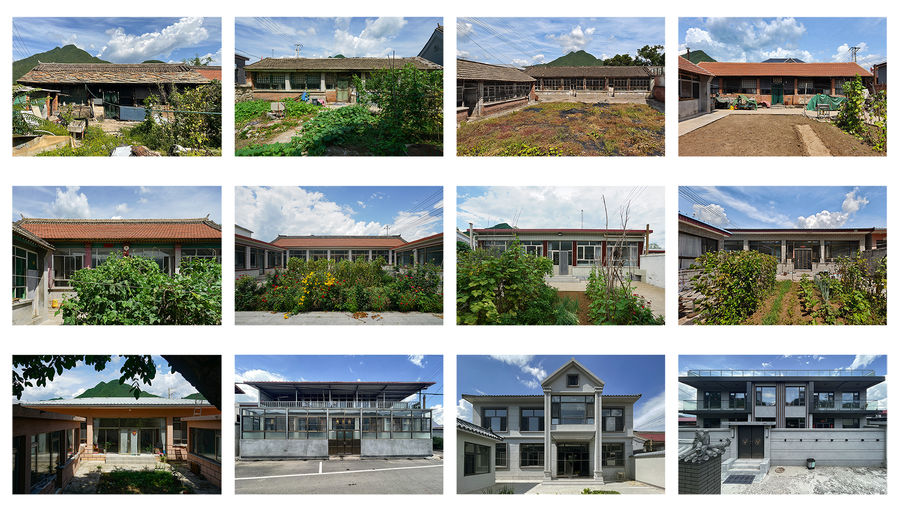
本村正房現(xiàn)狀采樣 ?xiān氙建筑
正房的剪力墻縱向布置、連通南北,陽(yáng)光充足的一側(cè)通設(shè)落地窗;一層公共空間混凝土板向南突出,底部與室內(nèi)天花板齊平形成連續(xù)頂面。The shear walls of Zheng Fang are longitudinally arranged, connecting the north and the south. Floor-to-ceiling windows are set on the sunny side. The concrete slab of public space on the first floor protrudes southward, with its bottom flush with the indoor ceiling forming a continuous top surface.
完全比照東鄰居山墻生成一座東南角的小房子,形成對(duì)宅基地邊界的主動(dòng)性控制,同時(shí)產(chǎn)生L型的院落:入西南院門,形成如影壁的玄關(guān)院;北進(jìn),院子朝雙向展開(kāi),西邊院墻設(shè)長(zhǎng)長(zhǎng)的石頭基礎(chǔ),供人在黃昏前休閑落座、避免陽(yáng)光照射;東邊形成三面環(huán)繞的角落,支持面西遠(yuǎn)眺。A small house in the southeast corner is completely built in accordance with the gable wall of the east neighbor, forming an active control of the boundary of the homestead, at the same time creating an L-shaped courtyard. Entering from the southwest gate forms a foyer courtyard like a screen wall; entering from the north, the courtyard unfolds in both directions. A long stone wall foundation is set in the west courtyard for people to relax and sit before dusk, avoiding direct sunlight. On the east side, a corner surrounded on three sides by walls is formed to look out to the west in the distance.
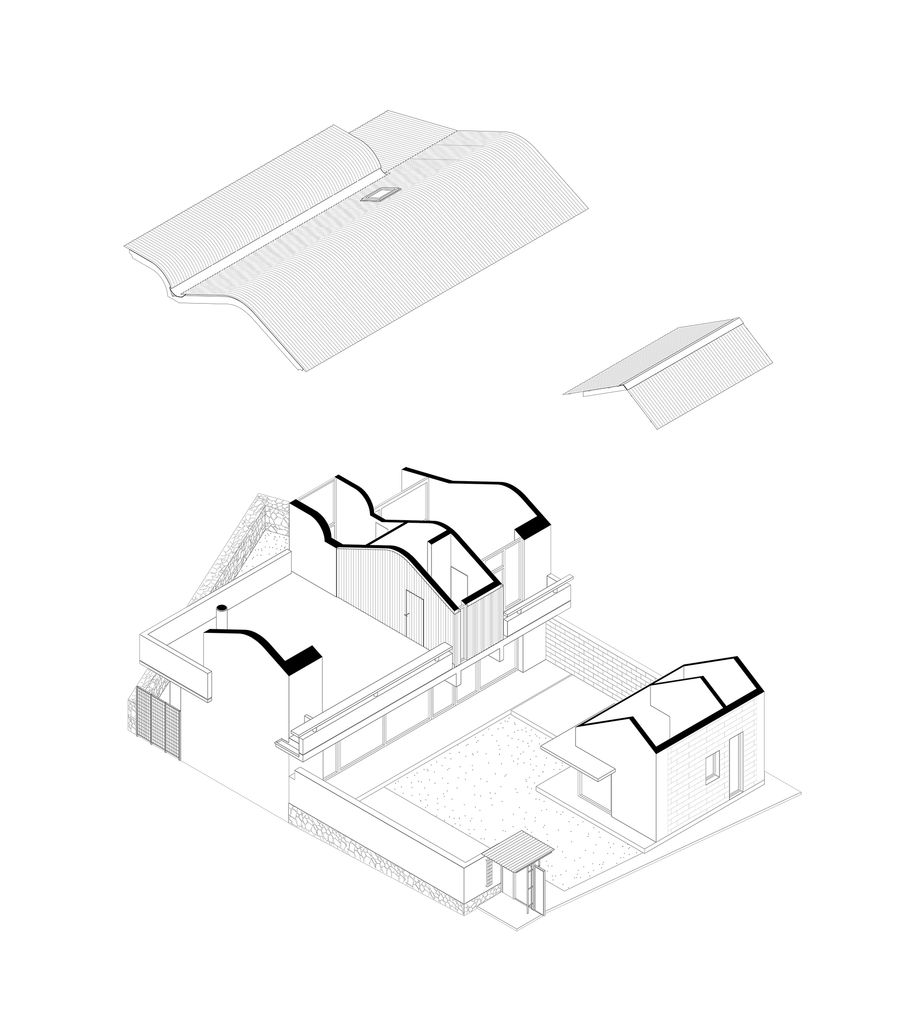
軸側(cè)圖 ?xiān氙建筑
院落不是室內(nèi)空間的外部,而是居住空間的內(nèi)部:整個(gè)一層成為輪換交流的安定場(chǎng)所,一個(gè)完整的起居廳。The courtyard is not the exterior of the indoor space but the interior of the living space. The entire first floor becomes a stable place for alternating communications, and a complete living room where one can stay anywhere.

從主廳桌區(qū)看院子 ?夏至
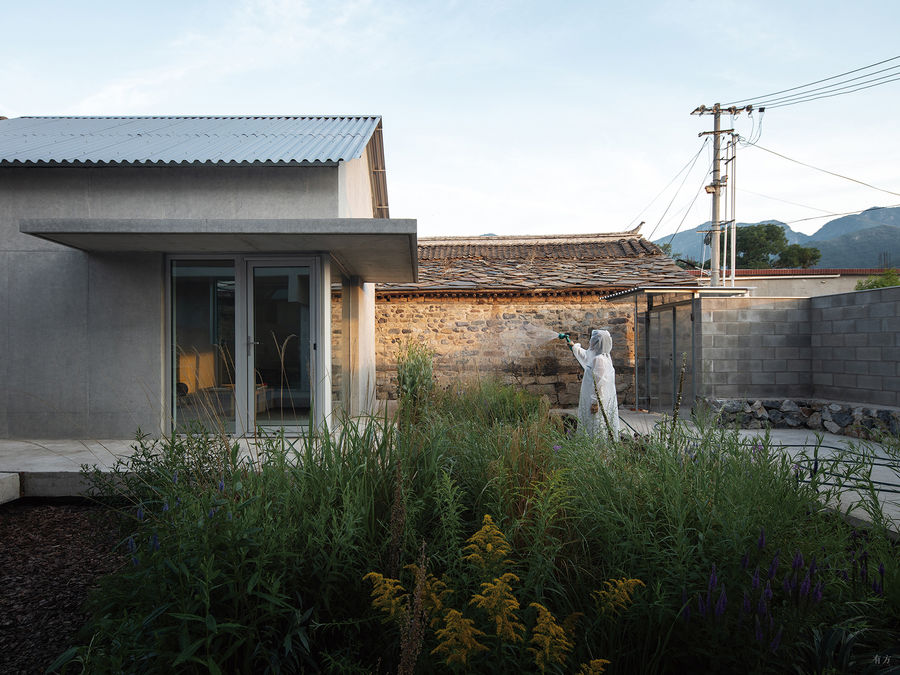
在院子里 ?夏至
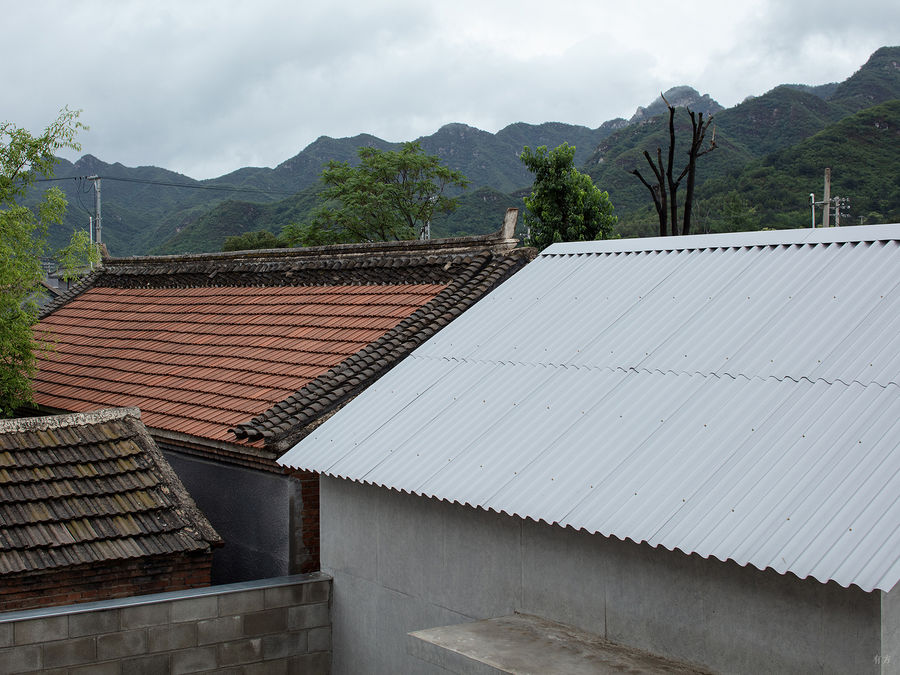
鄰里 ?夏至
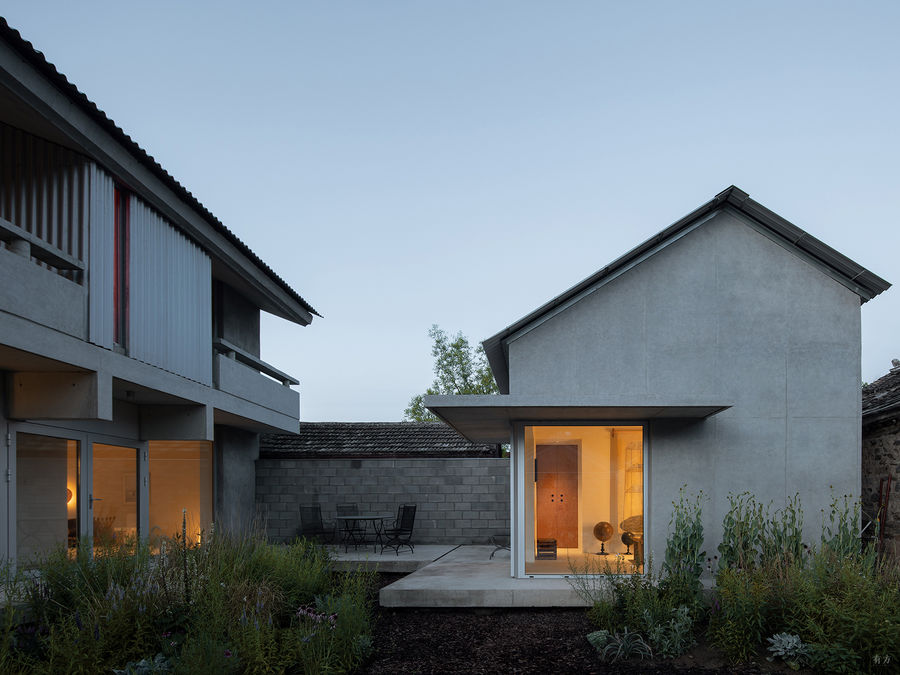
院東 ?夏至
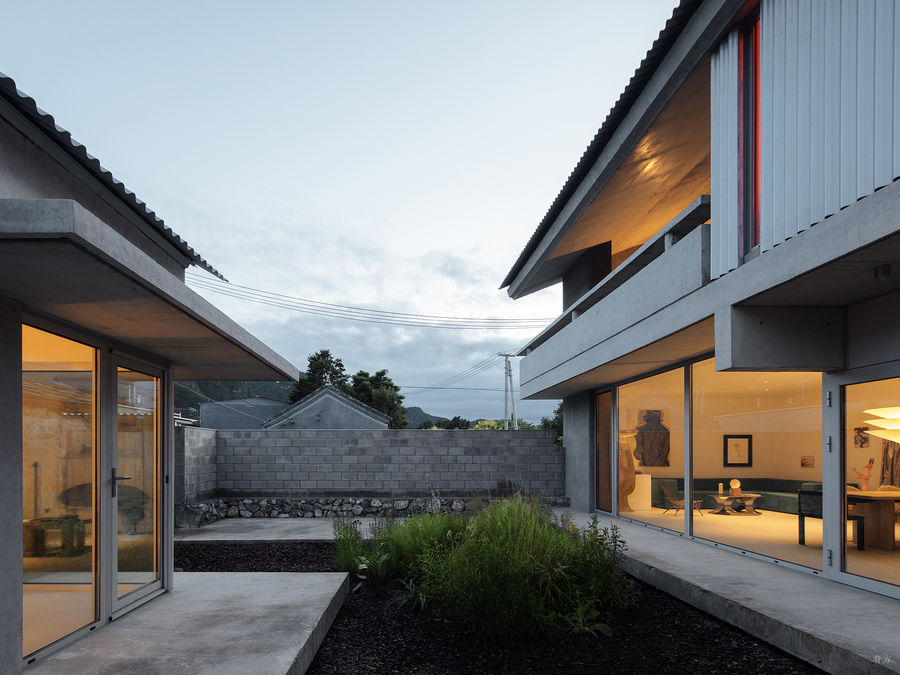
院西 ?夏至
巨大的外部:屋面、環(huán)境與信號(hào)
從外部的召喚開(kāi)始感應(yīng)。The perception begins with the call from the outside.
每家每戶的屋頂聚集,構(gòu)成了綿延的族群景觀。我們作為“新村民”,選擇人字坡頂融入。The roofs of each household gather together, constituting a continuous landscape. As "new villagers", a gable roof is chosen to blend in to the vernacular landscape.
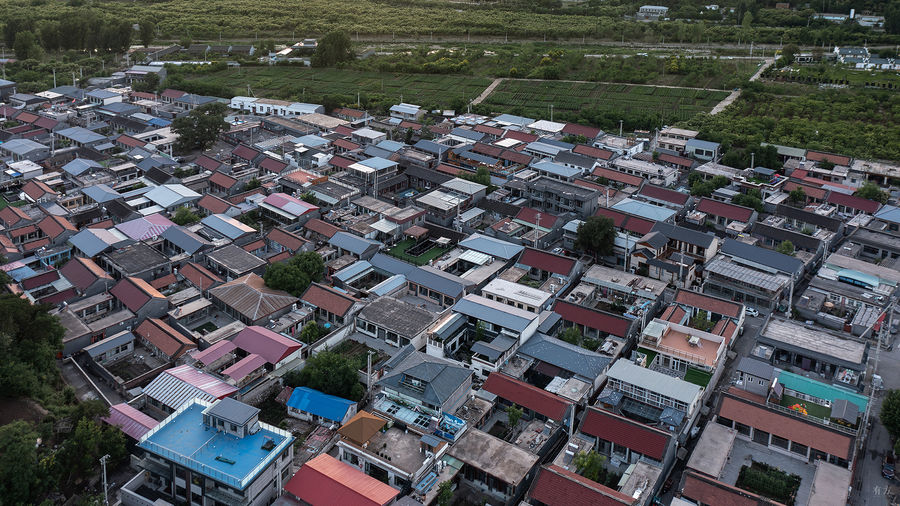
本村聚落航拍 ?夏至
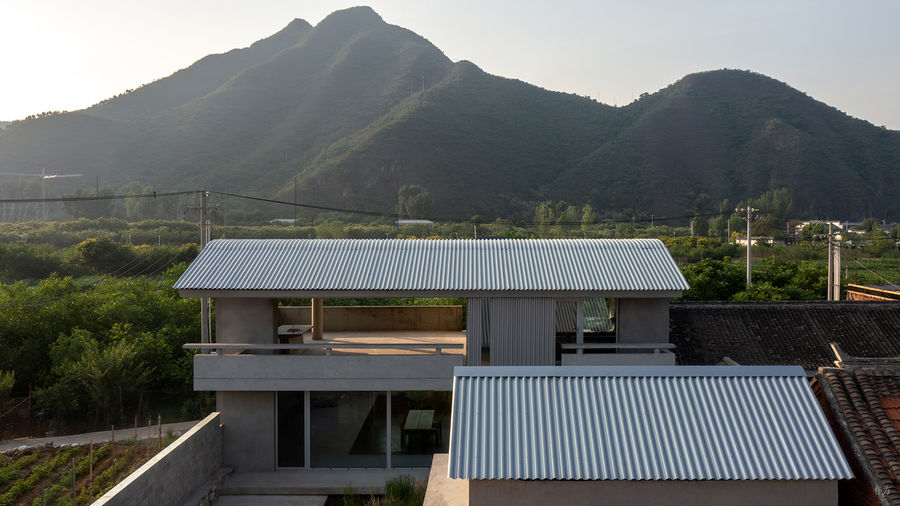
航拍 ?夏至
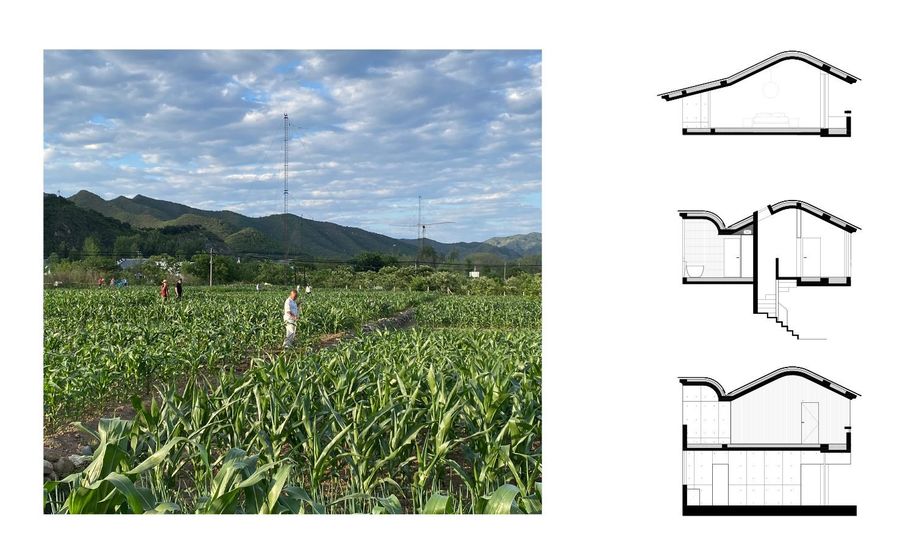
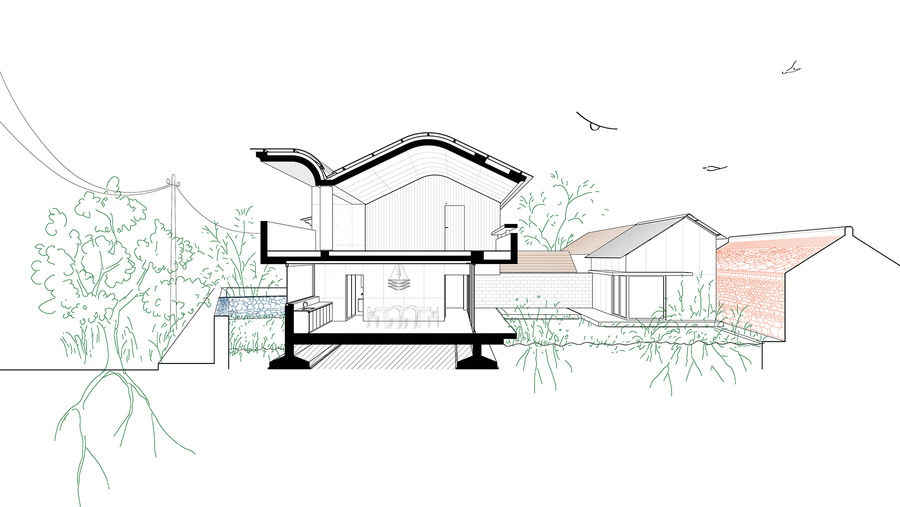
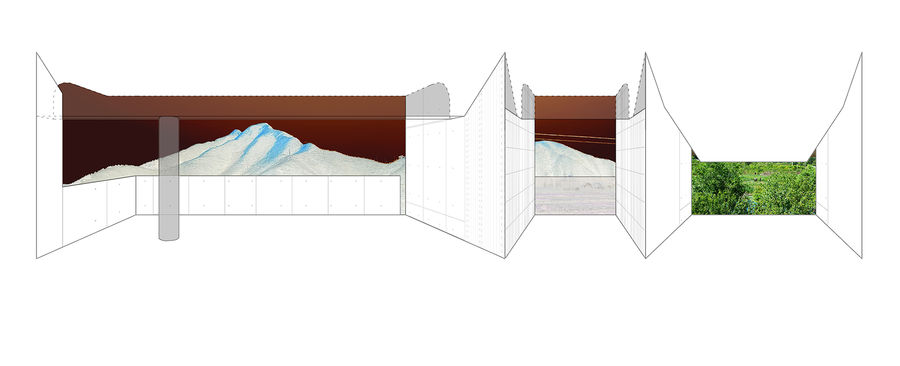
剖面關(guān)系 ?xiān氙建筑
場(chǎng)地位于村莊的最北端,開(kāi)闊的耕地、連綿起伏的山脈、落日夕陽(yáng),對(duì)屋面形成強(qiáng)有力的召喚,我們持不同的剖面姿態(tài)予以回應(yīng):主臥沿用雙坡人字頂,在北段調(diào)整屋面舉折、直指耕地田野,形成隱秘的指向關(guān)系;浴室,北段屋面向上卷拱,讓山景莽撞涌入;露臺(tái)被雙坡頂籠罩,北段連續(xù)向上卷拱,形成擴(kuò)張。至此,建筑成為景觀的眼睛、環(huán)境的耳朵、信號(hào)的喇叭。The open cultivated fields, the continuous mountains and the setting sun exert a powerful call on the roof, but we respond with different sections : The master bedroom follows the gable roof, and the roof pitch at the northern section is adjusted, directly pointing to the cultivated fields, forming a hidden pointing relationship; In the bathroom, the roof at the northern section curls upward, allowing the mountain view to flood in recklessly; In the terrace, a platform is covered by the double-pitched roof, and the northern section continuously curls upward, forming an expansion. Thus, the Architecture becomes the eyes of the landscape, the ears of the environment, and the horn of signals .
由于建筑的架構(gòu),使得外部的廣度和強(qiáng)度在日常中得以持續(xù)顯現(xiàn),給予人一種支持:在安穩(wěn)得出離、平靜的徘徊時(shí)接通非預(yù)設(shè)的信號(hào)。Due to the structure of the architecture, the breadth and intensity of the outside can continuously manifest in daily life, providing people with a support to connect to non-predetermined signals while wandering peacefully in their thoughts.
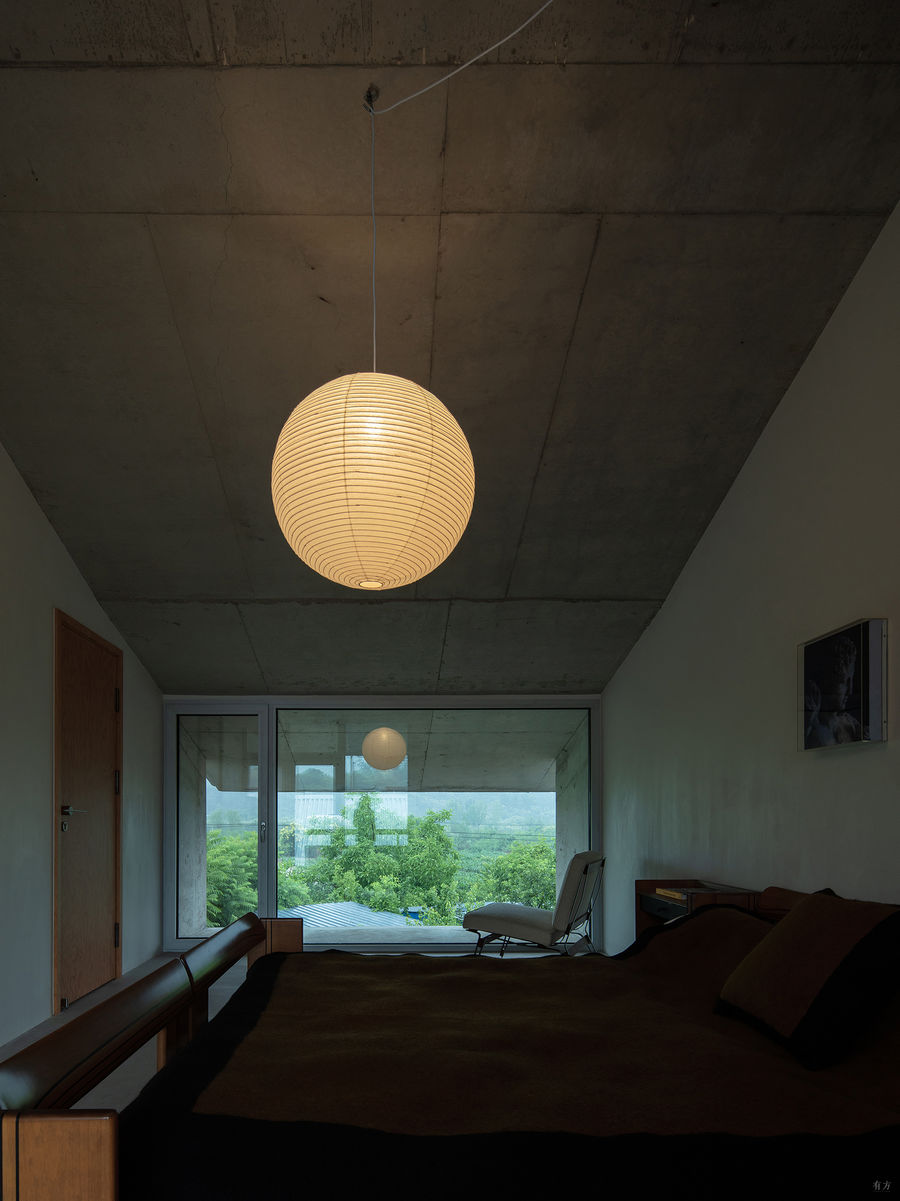
主臥北 ?夏至
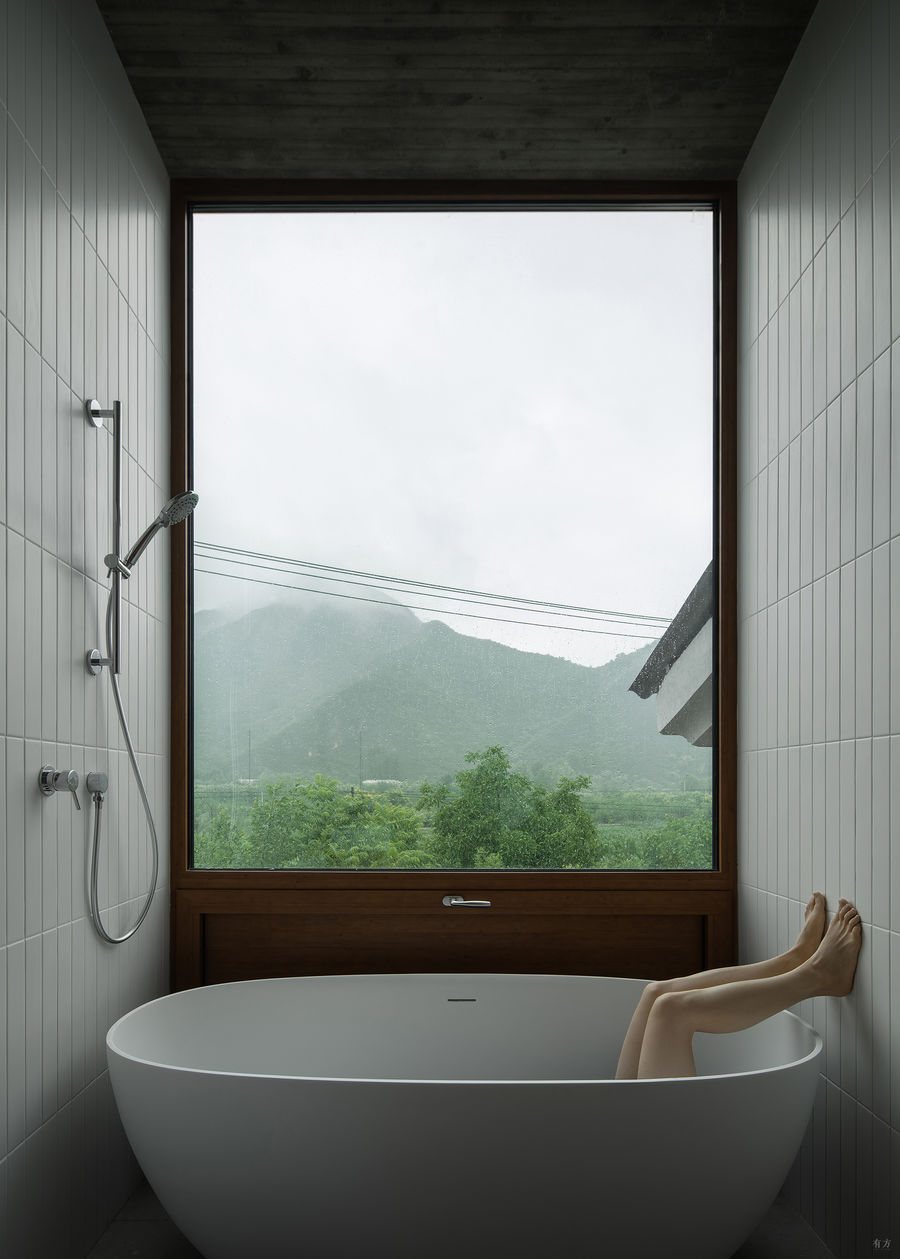
浴室北 ?夏至
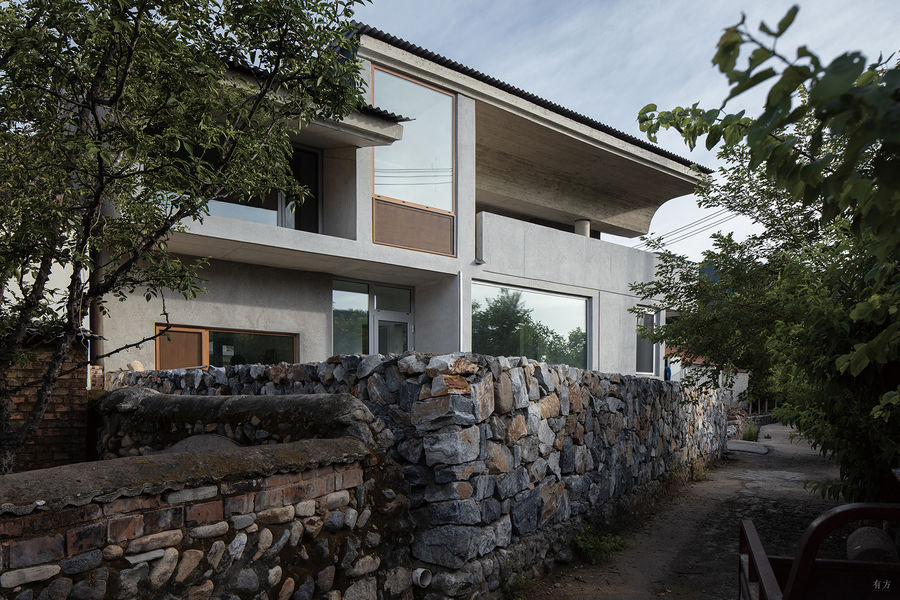
正房北 ?夏至
質(zhì)地:調(diào)色板和舞臺(tái)
村里各家的樣貌雖有不同,但又統(tǒng)一在一種“彩度偏灰”的普遍性中,呈現(xiàn)出共同體的自覺(jué)。我們用清水混凝土、水刷石、鋁鎂錳金屬波紋板、混凝土空心砌塊,編織起一組中性的灰度,搭建一出人是過(guò)客的現(xiàn)代戲劇舞臺(tái),以豐饒深邃的自然為主角,盛裝出席的物體為配角,開(kāi)始它們的表演。Although the house appearances of each house in the village varies, they are unified in a kind of universality of "low chroma and grayish". We use fair-faced concrete, cement, aluminum-magnesium-manganese corrugated sheet, and concrete hollow blocks to blend a group of neutral grays. A modern drama stage where people are passing guests is built, taking the rich and profound nature as the protagonist, and the well-dressed objects as the supporting role to start their performances.
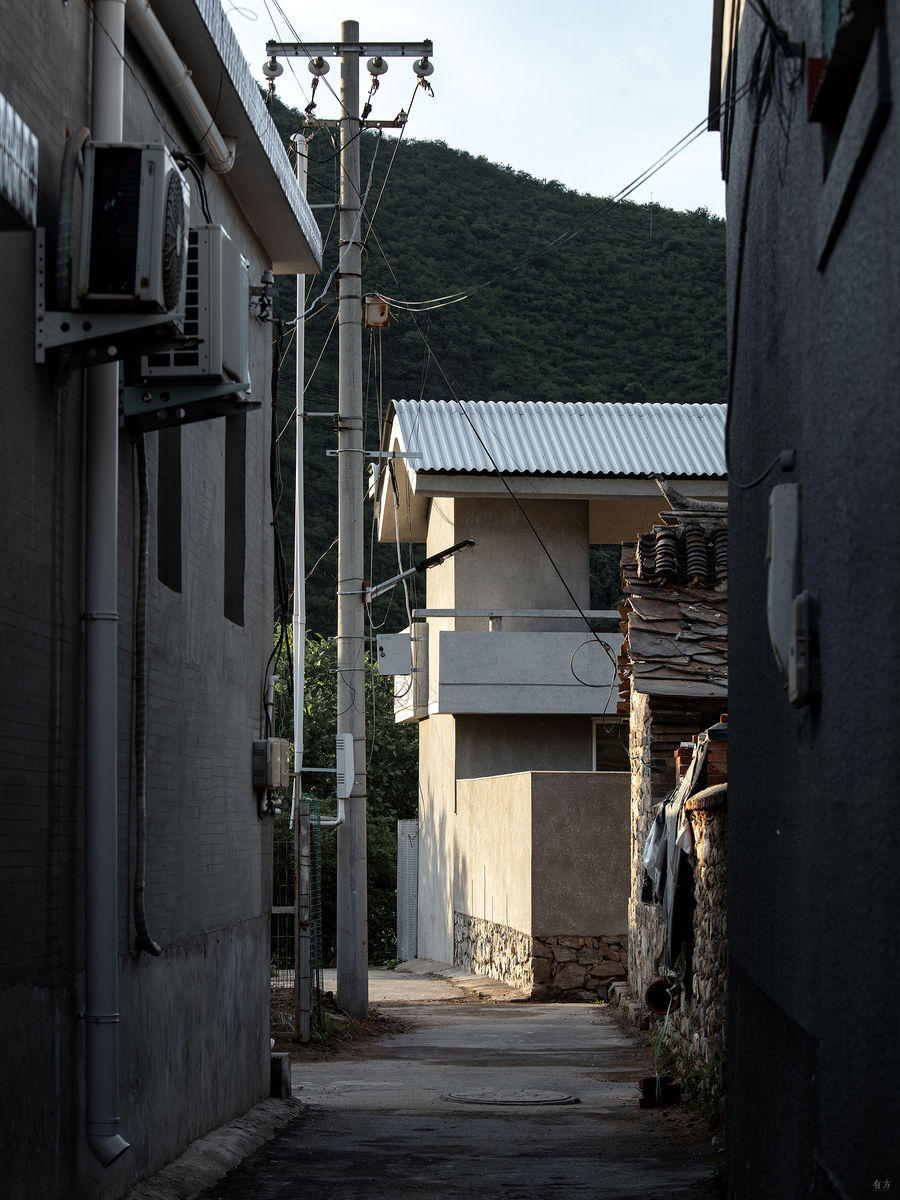
從入口巷道看宅院 ?夏至
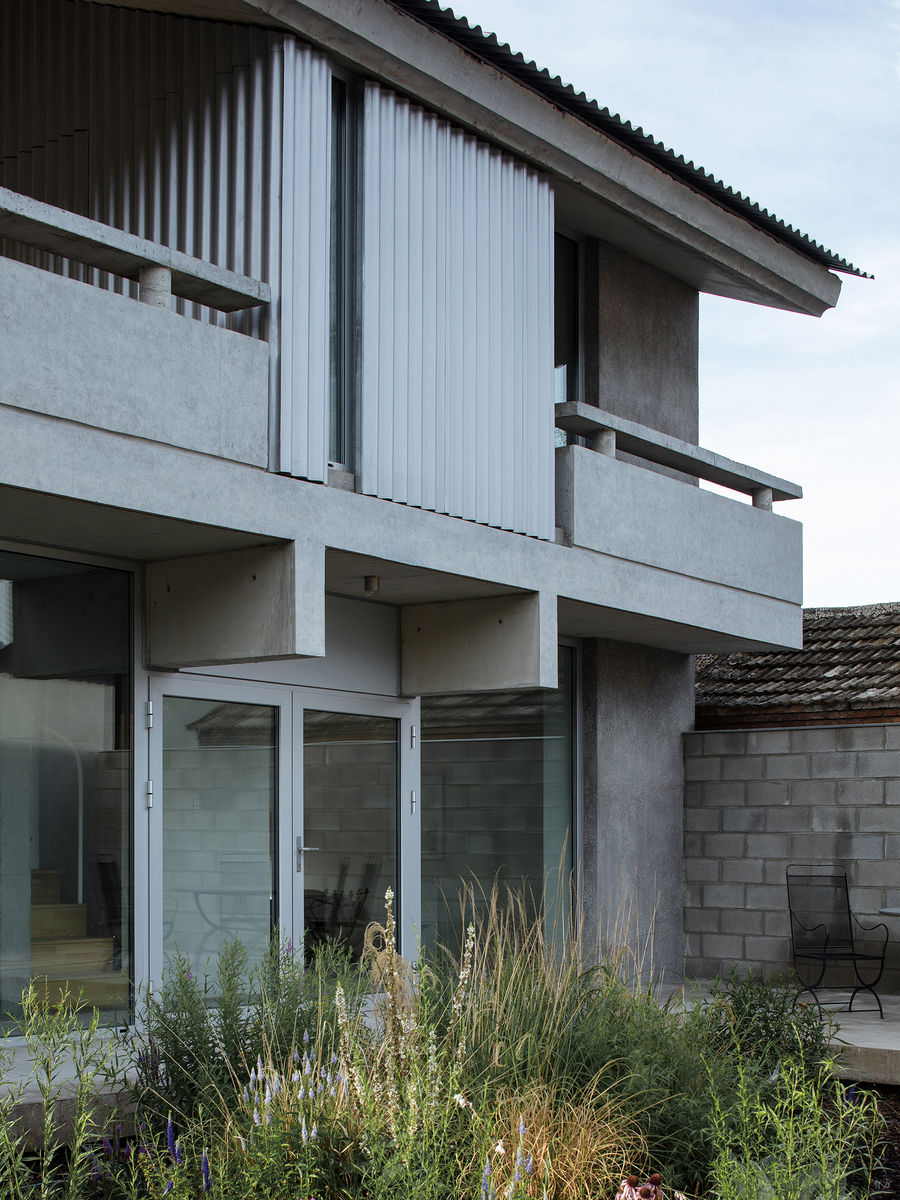
正房主入口 ?夏至
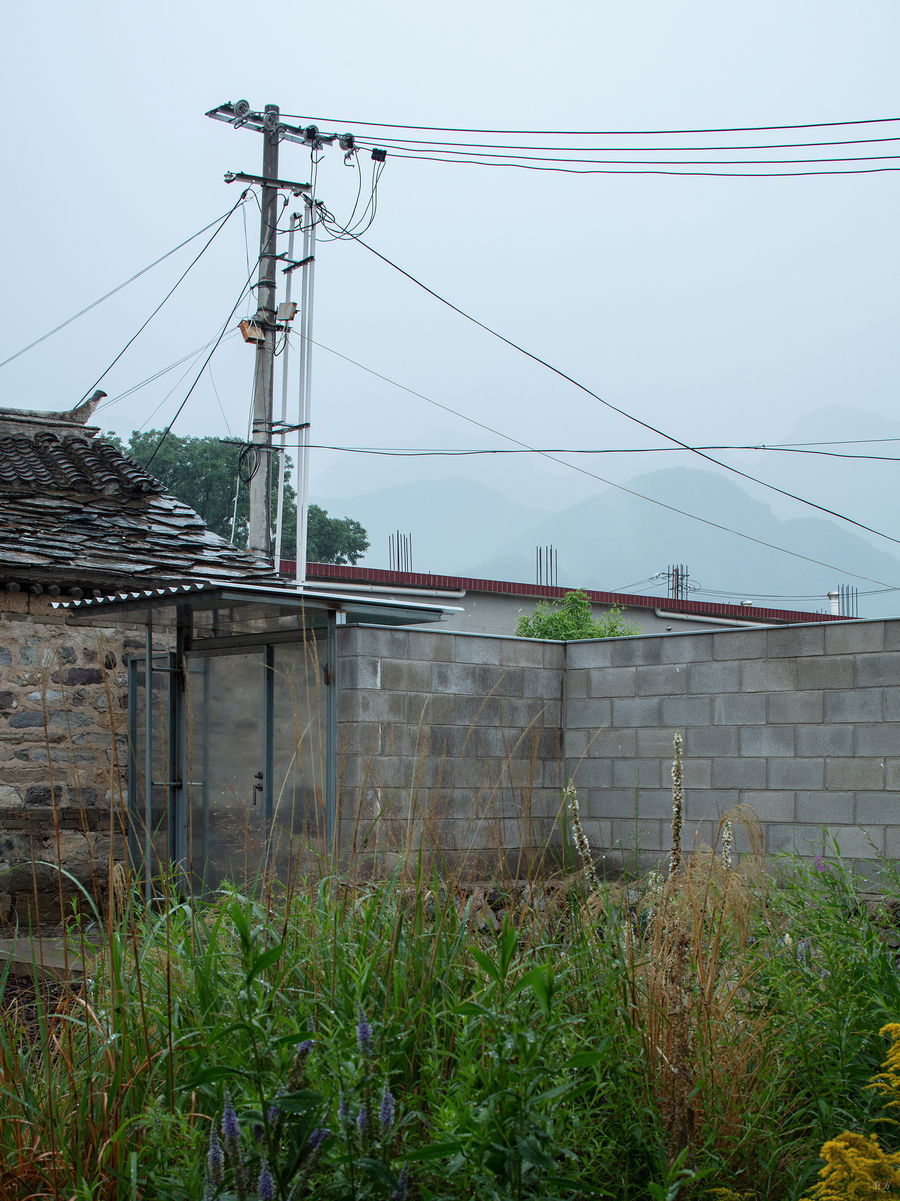
宅院入口 ?夏至
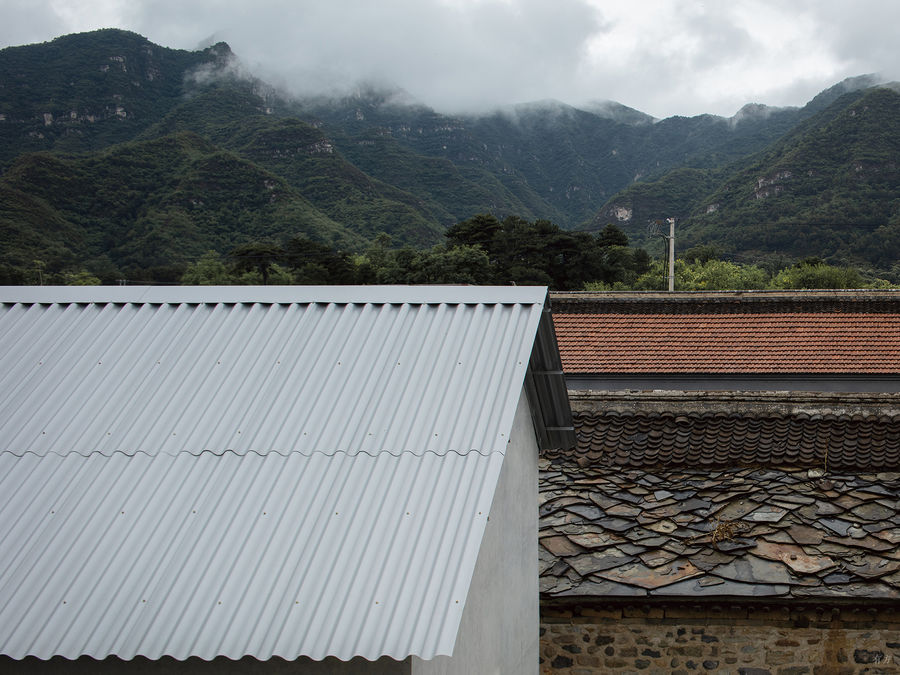
屋面質(zhì)地關(guān)系 ?夏至
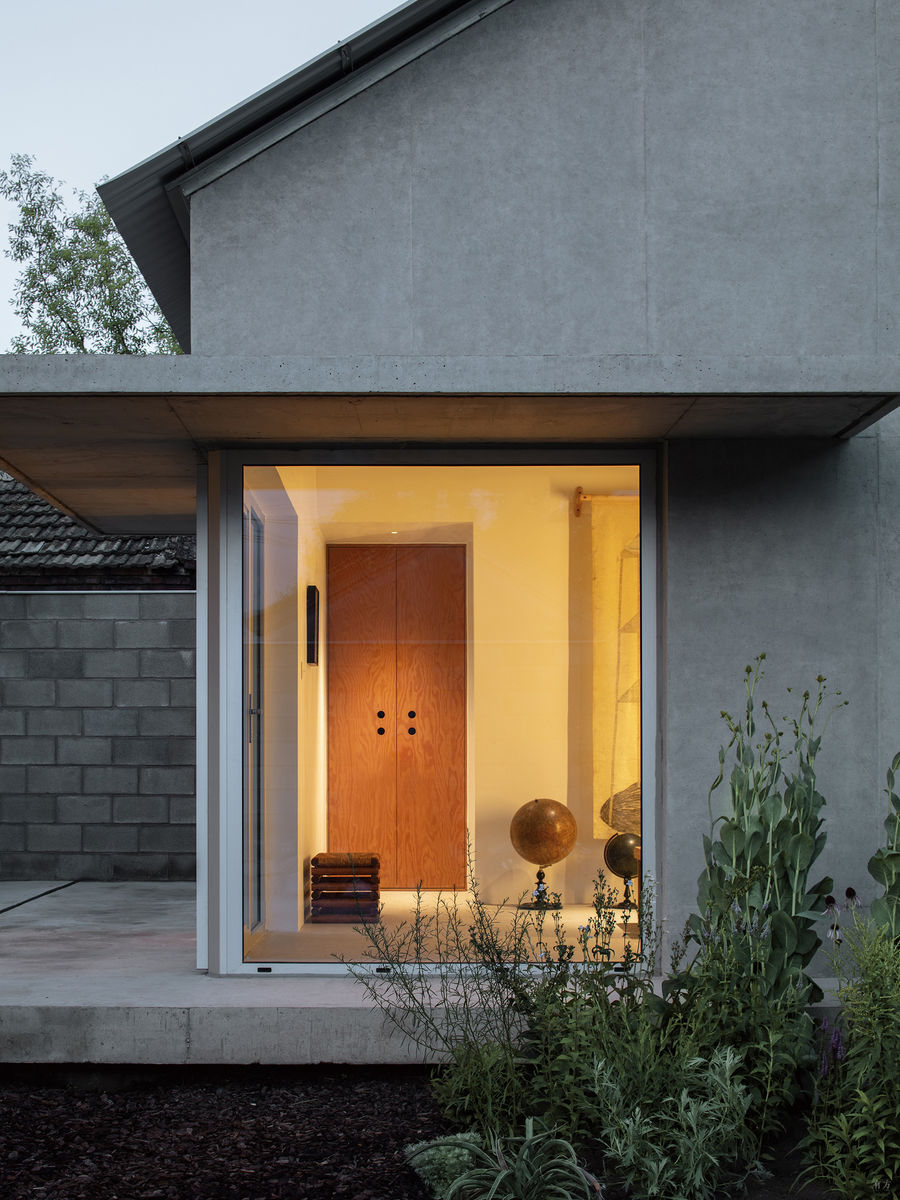
質(zhì)地關(guān)系 ?夏至
軟裝階段的某一天,業(yè)主大寶饒有興致地提起第一件確定進(jìn)入院子的家具——“一組保溫板顏色的藍(lán)色沙發(fā)”。之后,由“回到二十世紀(jì)”買手店創(chuàng)始人曹峰主導(dǎo)完成全部的軟裝選品和擺場(chǎng)。它們提示了宅院里的每一組家具和藝術(shù)品,在尋求與鄉(xiāng)村生活接壤的微妙關(guān)系:關(guān)于自然的靈感、人與人起初的共識(shí)、現(xiàn)當(dāng)代進(jìn)程和世界的訊息。One day during the interior decoration stage, the owner came up with the first piece of furniture that had to be included "a set of blue sofas in the color of the XPS insulation boards". Soon afterwards, Cao Feng, the founder of 20C Gallery, completed all the furniture selection and arrangement. Each group of furniture and artworks in the homestead is seeking a subtle relationship with the rural life, conveying the inspirations from nature, the initial consensus among people and the contemporary process of the world.
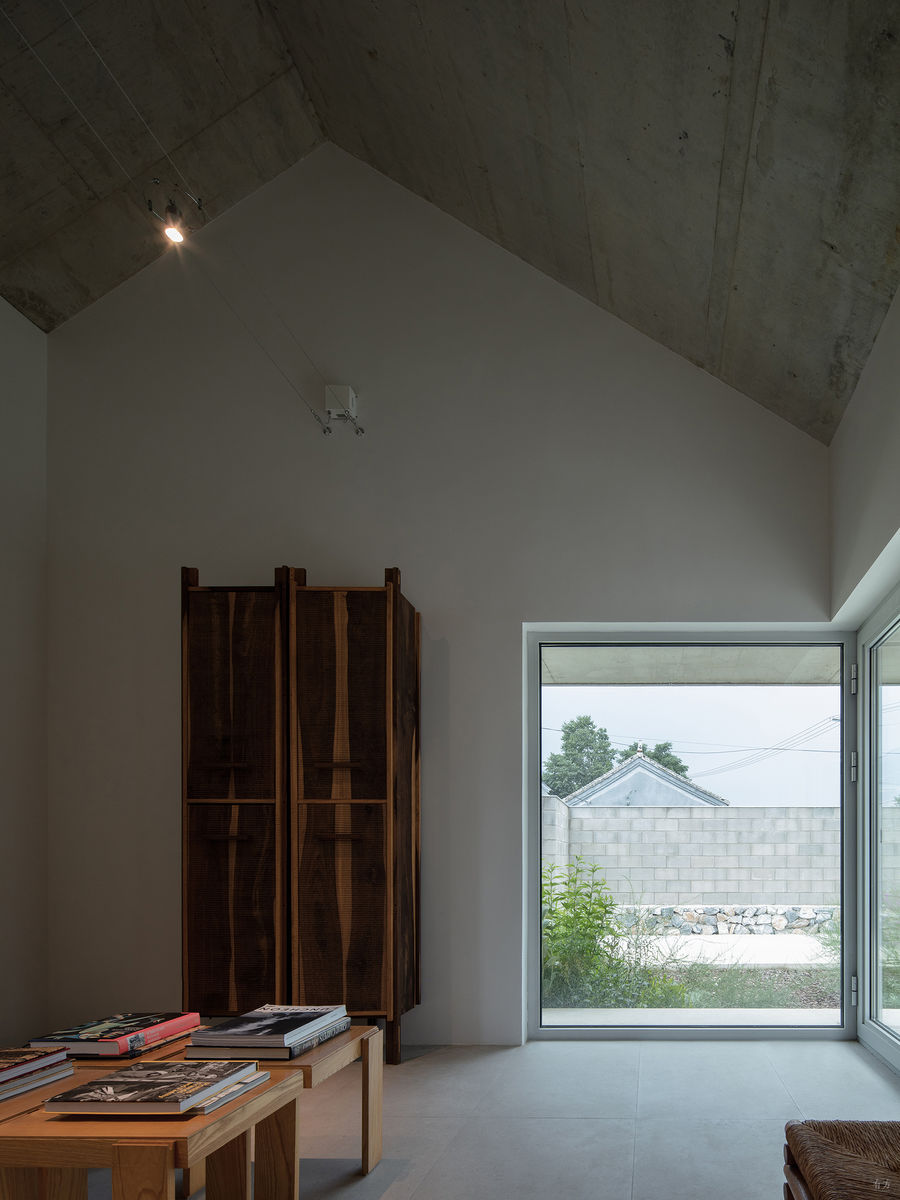
工作室 ?夏至
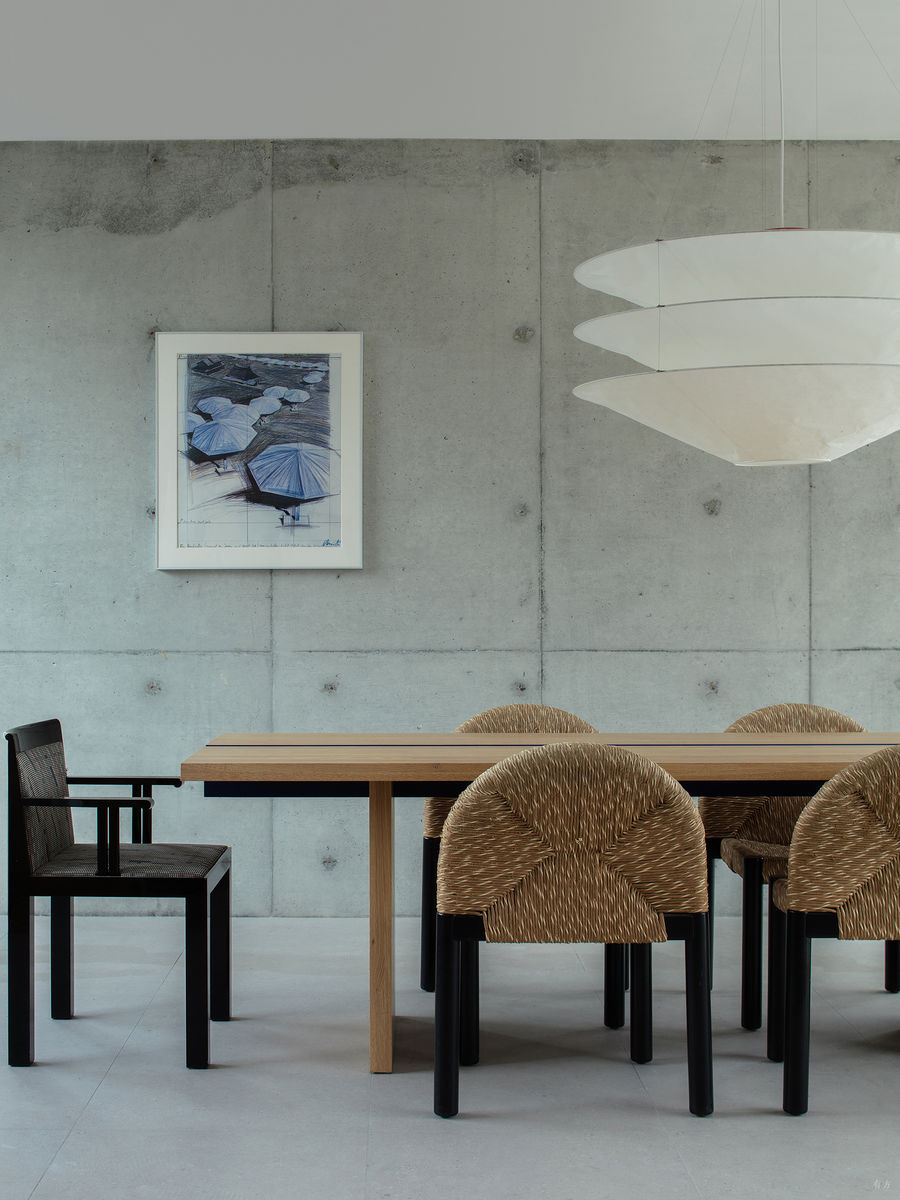
主廳的桌區(qū) ?夏至
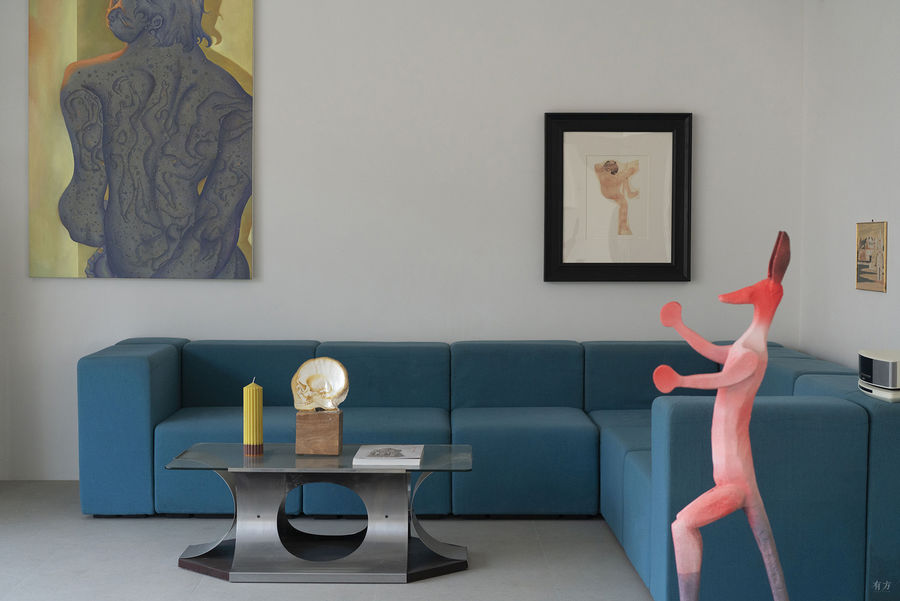
主廳西沙發(fā)區(qū) ?白河
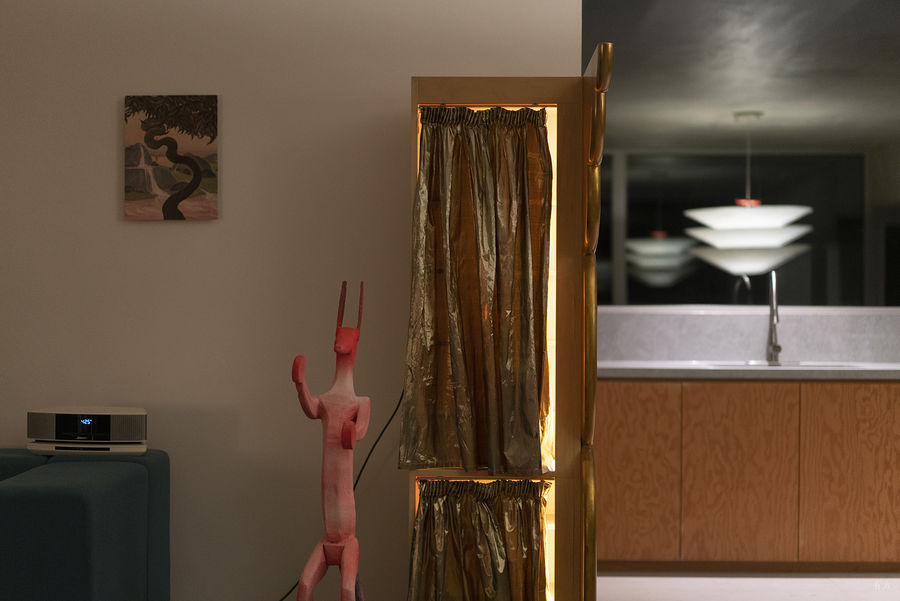
主廳北 ?白河
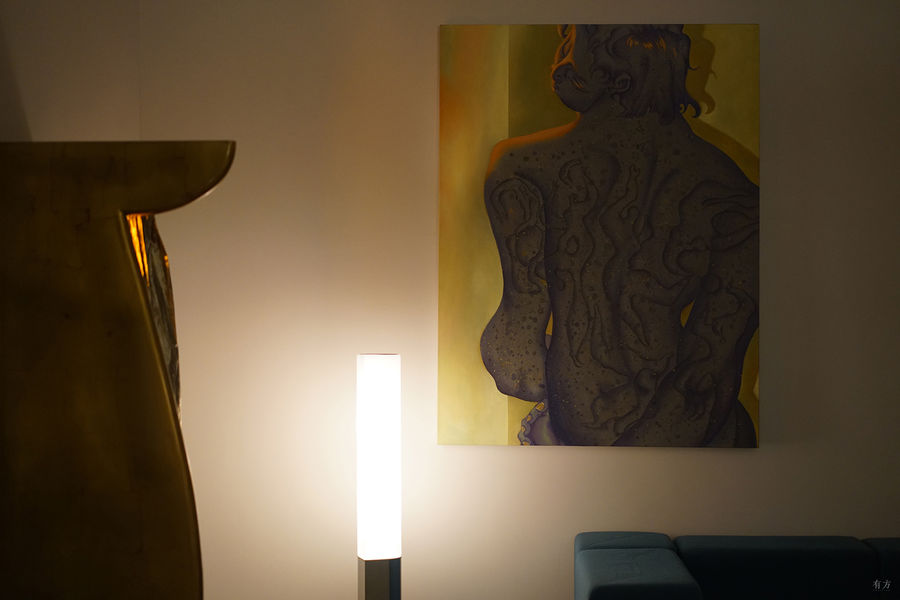
主廳西 ?白河
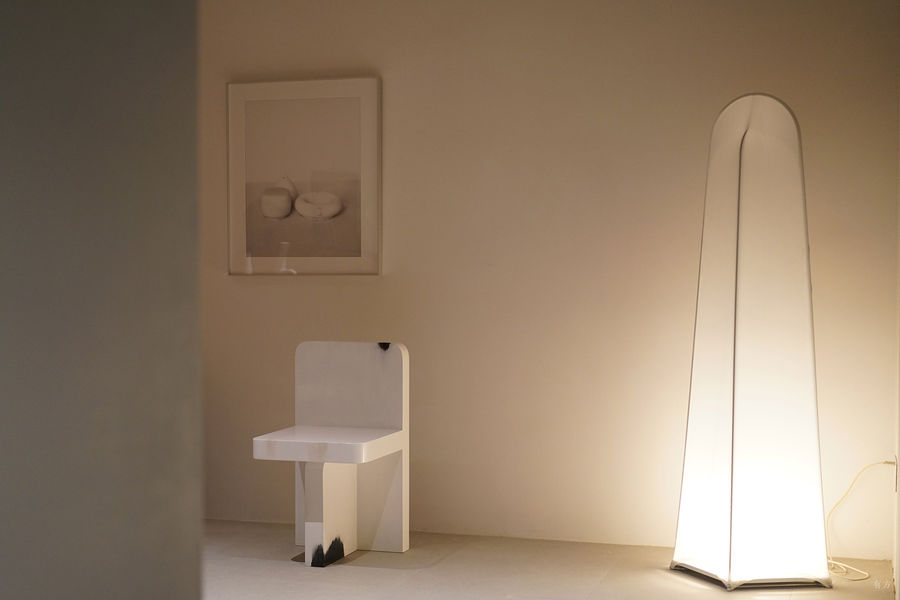
茶室東 ?白河
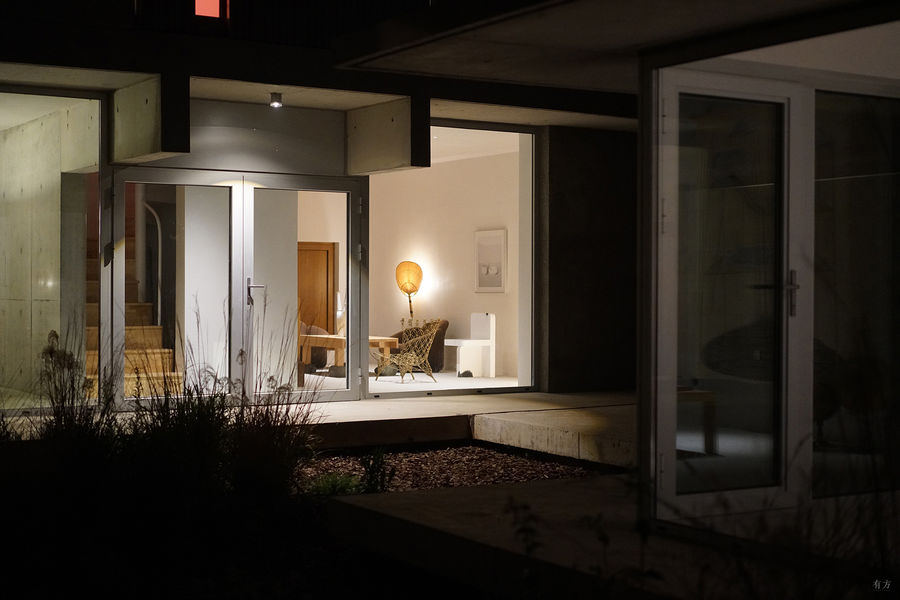
茶室夜 ?白河
在環(huán)境中站立
這是一個(gè)關(guān)于站立的故事,在普遍性的村莊中站立,在廣闊的山河田圖景中站立,在現(xiàn)代語(yǔ)境中站立。它并不因鄉(xiāng)村的特殊風(fēng)情,不因這塊土地、這座建筑是否永久屬于誰(shuí)而變動(dòng)本質(zhì)。This is a story about standing, standing in a village, standing in the vast landscape of mountains, rivers and fields, standing in the modern context. The special folk customs of rural areas, or whom the permanent ownership of this land or this building belongs to won’t change its essence.
這也是一個(gè)接收信息、發(fā)出信號(hào)的故事。對(duì)我們來(lái)說(shuō),一種關(guān)乎生存的需要在我們初到場(chǎng)地時(shí)就已潛伏:對(duì)更廣闊的存在,尋求一種非常直接、非常肯定的品質(zhì),簡(jiǎn)單站立、絕對(duì)靜止。
This is also a story of receiving information and sending out signal. For us, a need related to survival lurks when we first arrived at the homestead: to seeking a very direct and affirmative quality for the broader existence, with simple standing and absolute stillness.
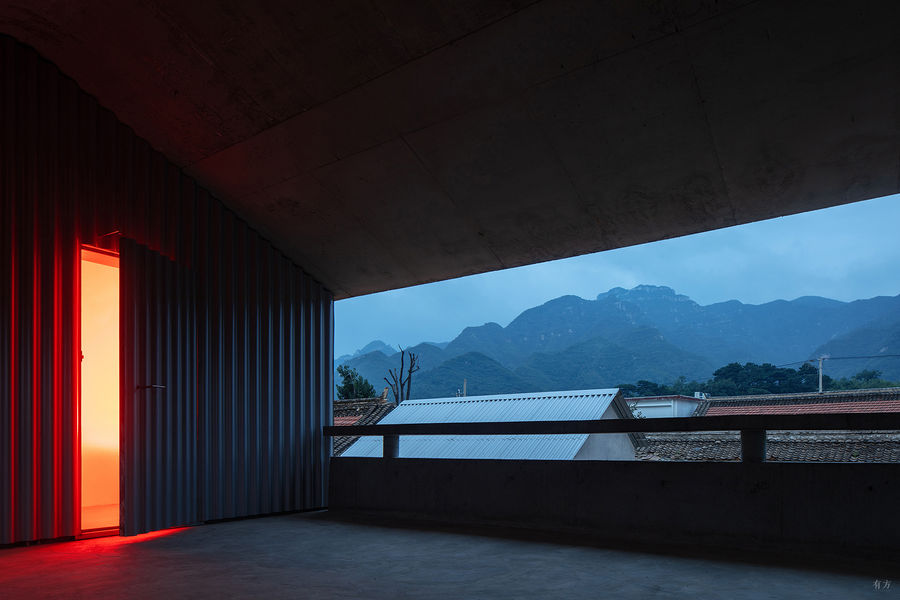
露臺(tái)南 ?夏至
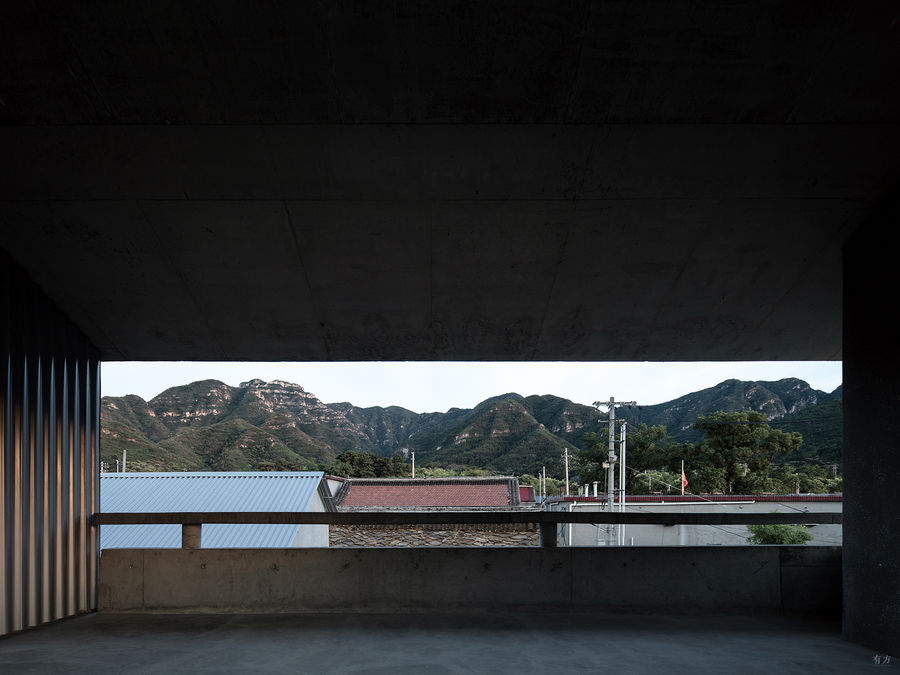
露臺(tái)東南 ?夏至
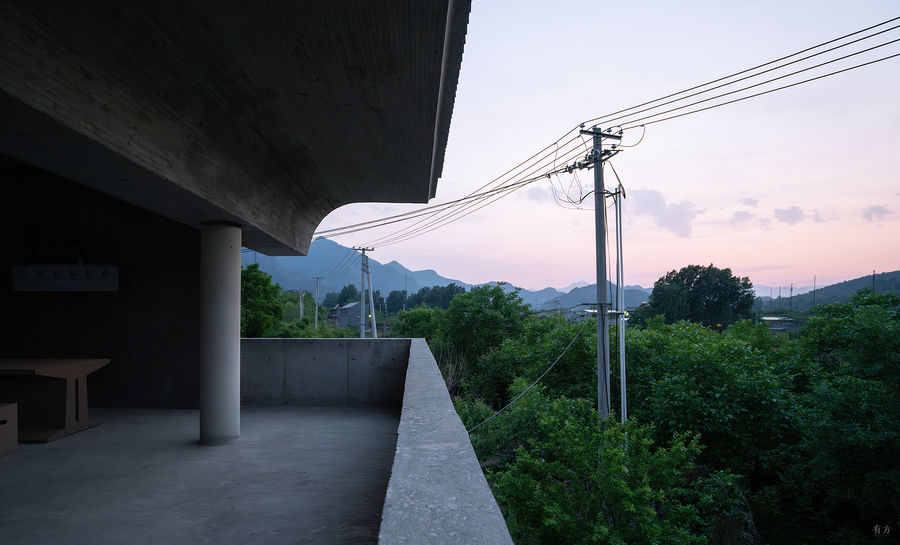
露臺(tái)北 ?白河
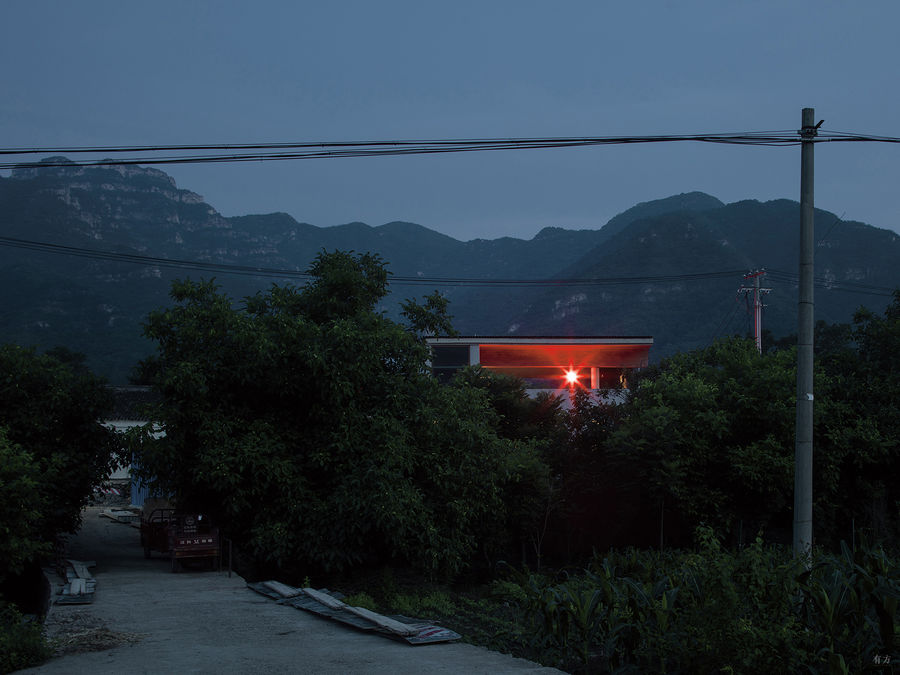
信號(hào)Ⅰ ?夏至
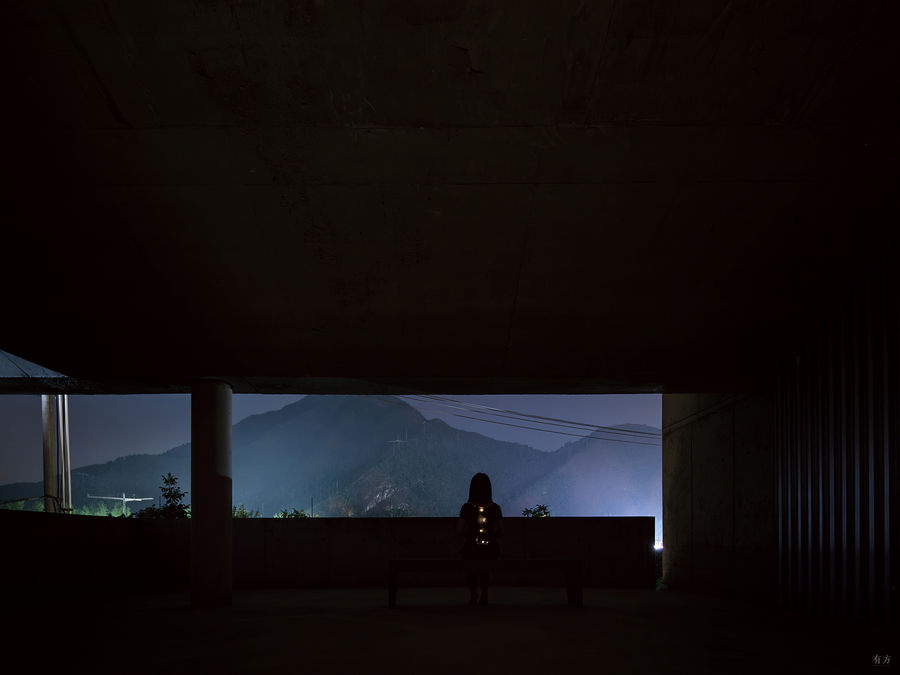
信號(hào)Ⅱ ?夏至
設(shè)計(jì)圖紙 ▽
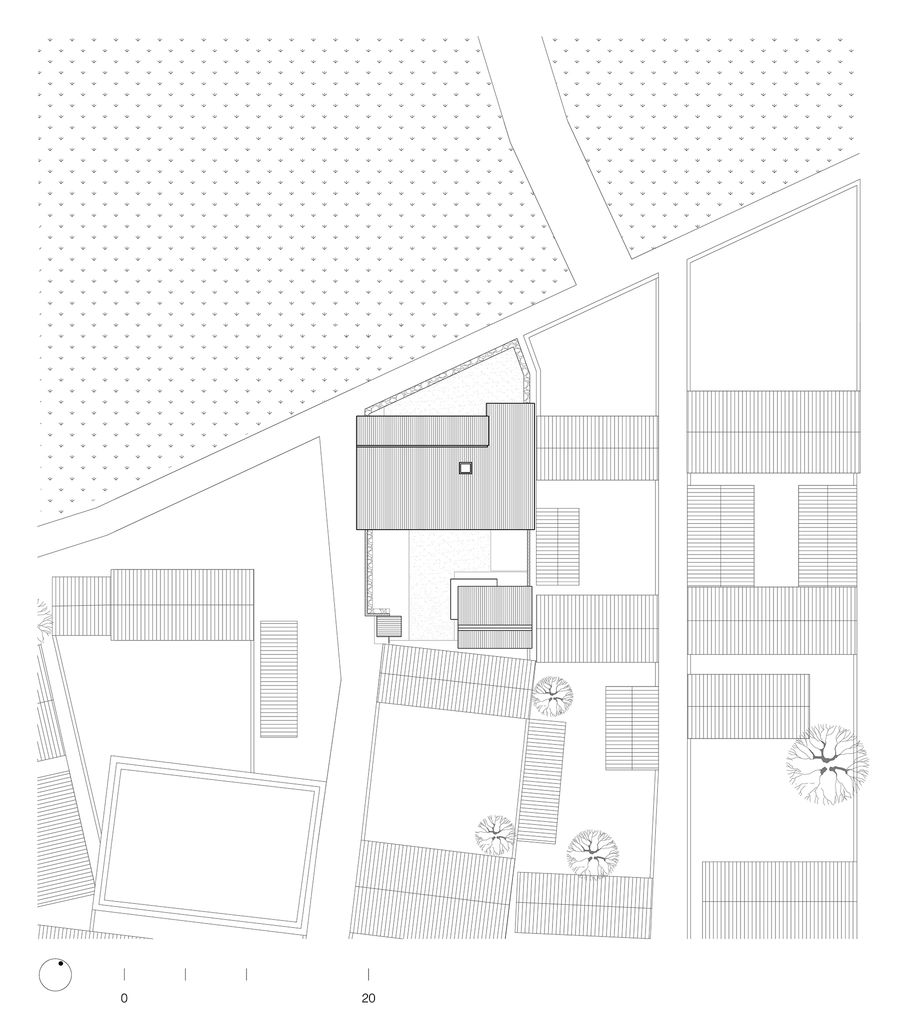
總平面圖 ?xiān氙建筑
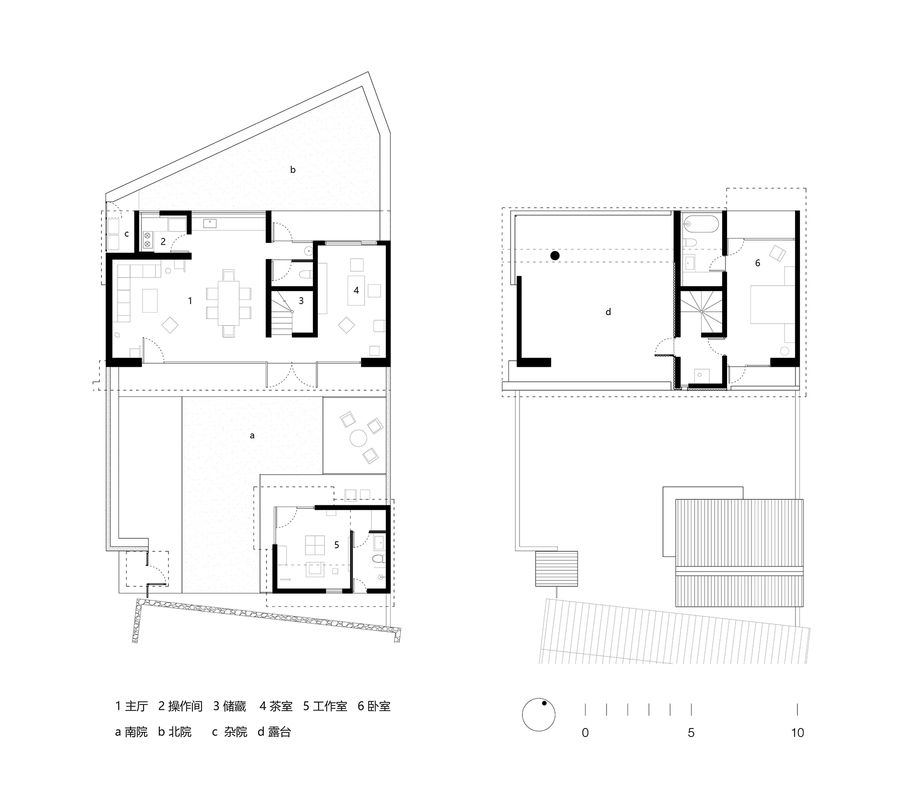
平面圖 ?xiān氙建筑
完整項(xiàng)目信息
項(xiàng)目名稱:玉米地住宅
項(xiàng)目類型:建筑/景觀/室內(nèi)
項(xiàng)目地點(diǎn):北京懷柔區(qū)
用地面積:300平方米
建筑面積:210平方米
整體設(shè)計(jì)單位:xiān氙建筑工作室
主創(chuàng)建筑師:王巖石、白河
整體設(shè)計(jì)團(tuán)隊(duì):周夢(mèng)箏、劉宜鋒、華金蓉(實(shí)習(xí))
結(jié)構(gòu)設(shè)計(jì)師:趙曉雷
軟裝設(shè)計(jì)及落地團(tuán)隊(duì):曹峰團(tuán)隊(duì)/回到二十世紀(jì)中古家具買手店&20C Gallery收藏級(jí)設(shè)計(jì)畫廊
施工團(tuán)隊(duì):王海江團(tuán)隊(duì)/土建、蔣可祥團(tuán)隊(duì)/室內(nèi)、喻喜旺團(tuán)隊(duì)/金屬品牌團(tuán)隊(duì):益匯達(dá)/清水混凝土修復(fù)、施維爾/門窗
業(yè)主:山上有蔥/鄉(xiāng)村生活建造者
圖片攝影:夏至、xiān氙建筑工作室
視頻版權(quán)及制作:xiān氙建筑工作室
更多相關(guān)內(nèi)容推薦
武漢咫尺設(shè)計(jì)︱大自然的筆觸與夜的深邃,穿越時(shí)間跨度的現(xiàn)代靜謐之家










評(píng)論(0)